
My name is Ahmad, and I was born in Damascus. I was exiled from the country during the revolution because I wrote songs that were critical of the government.The authorities gave me just hours to leave my home country and move to Lebanon.
After I fled, I no longer felt like myself because people saw me as just a young refugee, and many of them just wanted to take advantage of me. But no matter what, I could still hold onto my music.
I was playing on the streets of Beirut to try and get some money – through this I met other musicians in the city, and formed a band. I was able to play my protest songs, but at a price; my freedom – even though I was no longer in Syria, I was still being monitored. My house was broken into many times by Assad regime monitors, and they stole many papers with songs on them as well as my passport. This meant I couldn’t get residency in Lebanon.
Our band was invited to play at a music festival in the Netherlands. I knew travelling without a passport would be difficult, but previously we had been able to travel together for 20, 30 days at a time, play some gigs, and then return. I thought “OK, I’m going over with the band, and we will come back to Lebanon together as always.” But this time, everything changed – Lebanon refused to let me back into the country. My life was suddenly turned upside-down because one person decided to deny me entry to Lebanon.

I was immediately moved to an asylum centre called Ter Apel, where they took everything from me, including my name and my guitar. It never even crossed my mind that they would take my instrument from me, and I felt naked without it. Not only was my freedom as a person taken, but my freedom of expression and my identity was too. To them, I wasn’t a human, I was a “case file”.
The conditions at Ter Apel were unsuitable for cows. I was with 10 or 11 people in a small room, and sometimes due to overcrowding inside, we were left outside whatever the weather was. Some people smuggle knives in and fight with each other and the security don’t do anything about it. Some families stay in these conditions for 2, maybe 3 years without hearing anything about their application. I felt the same sense of injustice in the Netherlands as I did in the Middle East.
I was moved from Ter Apel to an old jail in Amsterdam, which has been converted into an asylum processing center. While I had my own room here, it was still a jail cell, which was also very heavy, and my trauma of being arrested in Syria came back. But here I was given my guitar and my laptop back.The windows were closed, the walls were thick, and I thought to myself “this is a great studio!”, and recorded an album in my cell.
This journey was incredibly tough and dehumanising, but I held onto my music. You have to have something to hold onto, otherwise you would go mad. And this is why Musicians Without Borders ’ work in asylum centers is so important – we give people something to hold onto.
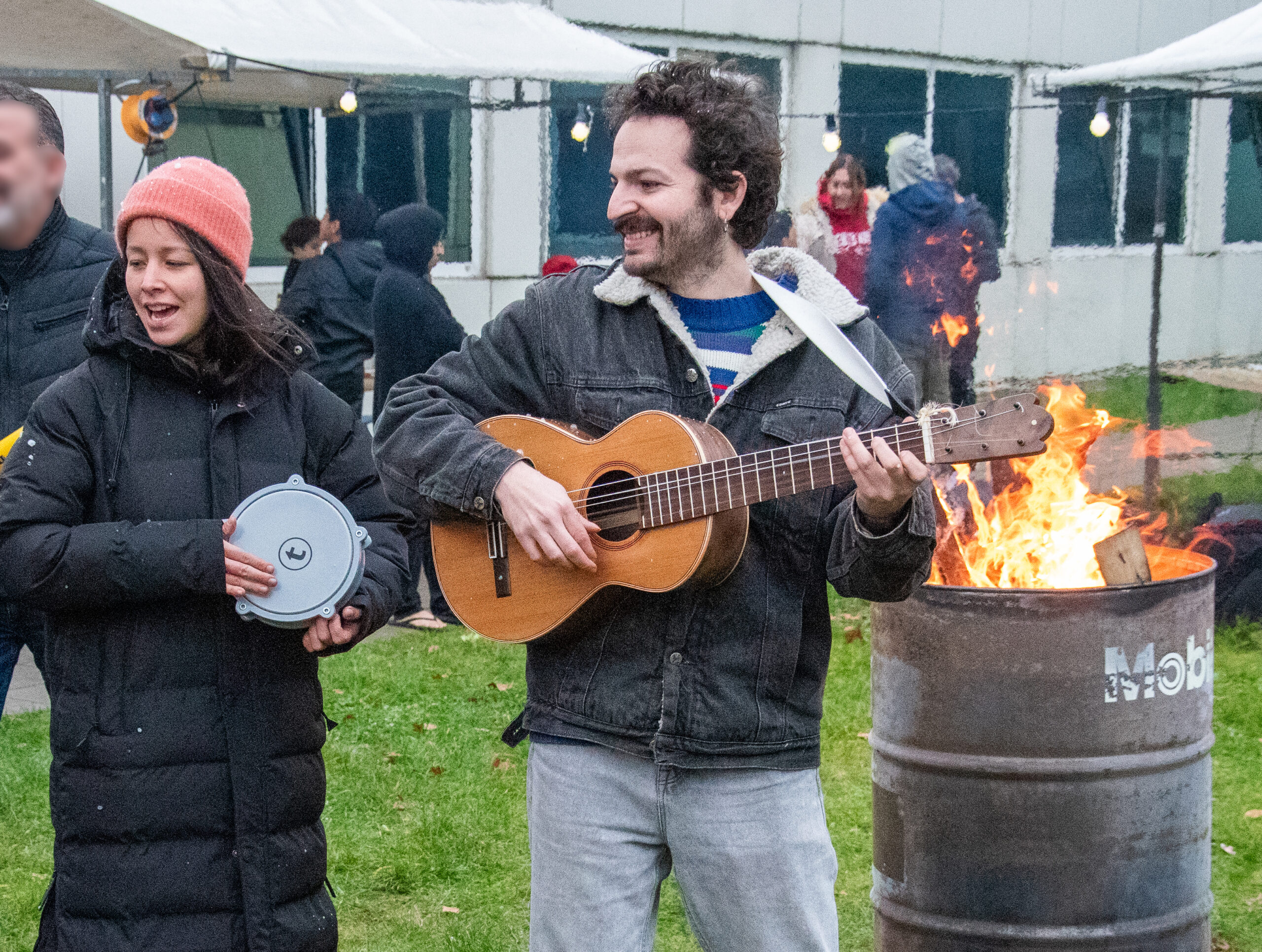
Because of my experience, I wanted to help other people after I was granted asylum, and I knew that I could help people with music. Through the Welcome Notes program from Musicians Without Borders , I am able to go to centers and run workshops with the people housed there. Even if some participants just sit and listen, we are part of their stability, which is so incredibly important. We go for human interactions, look eye to eye, play music, sing, jam, speak, and that’s very important to be stable.
Music can bring colour to the grey days of asylum centers. Through our This Is Me campaign, you can help us continue this incredibly important work, and brighten the days of people waiting without end. Donate today to help us continue our Welcome Notes program in The Netherlands.
Thank you for reading my story – together, we will change the world through music.