

Music therapy
The Healing Power of Music: Music therapy
At Musicians Without Borders , we have witnessed the healing power of music around the world, over the past 25 years. The power of music sounds different in each of our programs, adapted to needs and culture, and in collaboration with local musicians and partners. One approach we use in our projects is music therapy, which is a powerful and evidence-based therapeutic approach that uses music to promote physical, emotional, and mental well-being. Whether through listening, singing, playing instruments, composing, or interacting with music as a group, music therapy can help individuals achieve healing and improve their quality of life and build resilience against hardships. What is Music Therapy?

Importantly, our use of the term “music therapy” is founded on the UK definition, where the job title and profession are legally protected. To identify as a music therapist in the UK, the practitioner must hold an MA Music Therapy, and be registered with the Health Care Professionals Council (HCPC). We refer to this definition in order to err on the side of caution with our use of a professional title. (It is crucial to acknowledge here the limitations of this definition in the contexts in which we work, where music therapy training is not available, professional bodies are not established, and English language terminology may not be appropriate.)
In these terms, music therapy is the clinical use of a musical intervention by trained therapists to address social, emotional, psychological, physical, and cognitive challenges. It can involve a range of activities such as improvisation, listening to music, singing, playing musical instruments, and creating music to support people to achieve specific therapeutic goals.It is indicated for people of all ages, including children, adults, and seniors, addressing a wide range of health conditions from anxiety and depression to chronic pain and cognitive decline.
Benefits of Music Therapy
Music therapy offers numerous benefits that can enhance well-being across multiple aspects of life. Let’s dive into the key advantages:
1. Physical Health Benefits of Music Therapy
Music therapy has been shown to have a significant impact on physical health. It can improve motor skills, aid in rehabilitation, and reduce physical pain. For instance, rhythmic music can be used in rehabilitation settings to encourage movement and coordination in patients recovering from stroke or surgery. It also helps to reduce the perception of pain in chronic conditions, offering a non-invasive alternative to medication.
2. Emotional and Mental Health Benefits
One of the most prominent aspects of music therapy is its ability to manage emotional and mental health issues. Music has a unique ability to influence mood, reduce anxiety, and alleviate stress. In patients suffering from anxiety, depression, or PTSD, music therapy can provide a calming effect, making it easier for individuals to process emotions in a safe environment.
Through active participation in music, such as singing or playing instruments, individuals can express their feelings in ways that may be difficult with words. This is particularly useful for people who find it hard to articulate their emotions.
3. Cognitive Benefits of Music Therapy
Music therapy is highly effective for improving cognitive functions such as memory, attention, and problem-solving. This is especially beneficial for individuals with Alzheimer’s disease or other forms of dementia. Familiar music can trigger memories and provide emotional comfort, enhancing mental clarity and improving the patient’s ability to recall important events or people.
By stimulating the brain with music, individuals can also improve focus, enhance cognitive processing speed, and maintain mental sharpness as they age.
4. Social Benefits of Music Therapy
Music therapy can promote social interaction, which is beneficial for individuals struggling with social isolation or communication barriers. Group sessions often include collaborative activities, such as playing instruments together or participating in group singing, which encourage social bonding and improve communication skills.
For children with autism or those with developmental challenges, music therapy provides an effective way to engage with others, foster emotional connections, and develop critical social skills.
Applications of Music Therapy
Music therapy can be applied in a variety of settings, each tailored to the needs of the specific group or individual. Some of the most common applications include:
1. In Healthcare and Rehabilitation Settings
In hospitals and rehabilitation centers, music therapy helps patients recover from surgery, manage chronic pain, or cope with serious illnesses like cancer. It can also be used to alleviate the emotional and psychological stress that comes with medical treatment.
2. For Mental Health and Emotional Well-being
Music therapy is particularly effective for individuals dealing with mental health disorders such as anxiety, depression, or PTSD. The soothing nature of music promotes relaxation and can serve as a powerful tool for emotional expression.
3. In Elderly Care and Alzheimer’s Treatment
Older adults, especially those with dementia or Alzheimer’s disease, benefit significantly from music therapy. Music can stimulate memories, help patients maintain emotional connections, and improve cognitive function.
4. For Children with Special Needs
Children with autism spectrum disorder, ADHD, or other developmental challenges benefit from music therapy as it promotes emotional regulation, social interaction, and cognitive development. Music provides a creative outlet for expression and helps build confidence in social settings.
Music Therapy in Rwanda
In 2013, Musicians Without Borders partnered with the Rwandan healthcare organization WE-ACTx for Hope to support the establishment of the country’s first professional music therapy position. From 2013 to 2017, over a hundred young people living with HIV benefitted from music therapy sessions.
Rwandan musicians were brought in to offer additional skills, and they received mentoring in music therapy approaches. The collaboration led to the development of a training course in Music & Health for music students at the University of Rwanda.
To ensure the continuation of music therapy in Rwanda, the program has since collaborated with the University of South Wales and the University of the West of England, helping recruit music therapy students and graduates to carry the work forward.
One participant in the program shared their experience:
“When I am angry, I start singing. Later on, the anger had transformed into happiness, a good mood.” – Music therapy participant, Rwanda Youth Music.
In 2024, we further incorporated approaches from the field of music therapy into the Rwanda Youth Music program. 15 young music leaders received training from Rwandan graduates of a Music as Therapy International training course. This is a new expertise for the Rwanda Youth Music team, equipping team members with skills to work therapeutically and support participants’ Personal or Group Development Plans. They work musically with Karl Rogers’ core therapeutic conditions: empathy, congruence, and unconditional positive regard. These conditions complement and enhance Musicians Without Borders ’ principles, to create therapeutically conducive conditions. These music leaders now work weekly with children living with disabilities, in care settings and schools across Rwanda.
Music therapy in Palestine and Jordan
Since 2015 we have partnered with Music as Therapy International in Palestine. Palestinian musicians and social workers have been trained in techniques and theory aimed towards supporting developmental needs of children. Each training cycle of one year contains eight modules, including assignments, a training weekend with music therapists from Music as Therapy International, and practical work.
During the practical work, each trainee gives eight Music as Therapy sessions to a small group of young children with special needs, and they receive online supervision from a certified music therapist. The students have done their practical work in places such as a rehabilitation hospital, a center for children with learning difficulties, and centers for children with disabilities.
In 2023 the same course was followed in Jordan, and in 2025 the course will be specially adapted to the context, working with Jordanian music therapists to localise approaches and frameworks of knowledge to maximise the benefits for participants.
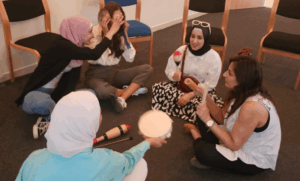
Umniat’s Music as Therapy Experience
Umniat’s Music as Therapy Experience

“If we give hope to humanity, humanity will give hope back to us.”
“If we give hope to humanity, humanity will give hope back to us.”
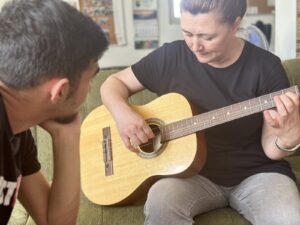
“Music? What do I need that for?”
“Music? What do I need that for?”
Reflections From Jordan
Reflections From Jordan
Musicians Without Borders on NPO Klassiek: Interview with Otto de Jong
Musicians Without Borders on NPO Klassiek: Interview with Otto de Jong
Music Bus NL: Interview with Lilian van der Vaart
Music Bus NL: Interview with Lilian van der Vaart
Because they were hiding, they couldn’t sing
Because they were hiding, they couldn’t sing

Asylum
Asylum
“I am fine, thank you.”
“I am fine, thank you.”
One… Four, five…
One… Four, five…

Rwandan music box
Rwandan music box
Rain drumming down
Rain drumming down
Ribbits in Rwanda
