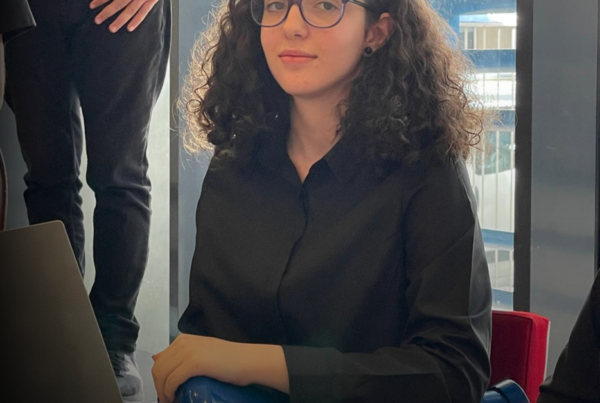

My name is Supakarn, and I was born in Thailand. I have close ties with Myanmar and have been a member of the Myanmar Jazz Club (MJC) for many years now. During my time as the training director for the Sound of Hope project, launched after the earthquake in March 2025, I’ve been incredibly fortunate to witness a transformation that far exceeded anything I could have imagined.
Just over a month ago, the director of MJC, Itö, approached me with a unique request: to train musicians and artists to enter earthquake-affected areas and offer basic, music therapy-informed techniques. Believing in him and his vision, I accepted the challenge wholeheartedly. I began recruiting, finding partners, and developing a curriculum based on all the literature I could find on music therapy for populations affected by natural disasters.
The literature in this field was surprisingly scarce. And when it came to adapting for the cultural nuances of a community navigating deep trauma, there were few (if any) guiding principles to rely on.
In light of this, I partnered with a music therapy researcher, who suggested we approach the project as a participatory action research, allowing the participants themselves to co-develop methods that responded directly to the realities on the ground. This meant that our training had to return to the fundamentals of care, culture, and music. The bare essentials. Musicians Without Borders got involved and provided us with 25 years worth of insight working in community music, offering us an invaluable foundation for shaping and adapting our practices.
Still, nothing could have prepared me for what happened next.
Two outcomes, in particular, took me by complete surprise. The first was the immense sense of connection that emerged within the team, both among themselves and with me, their trainer. In such a short time, the depth of mutual support they built was unlike anything I’ve experienced before. I’ve worked with teams who’ve been together for years and never reached this level of care and solidarity. They say trauma bonds people, but judging from the Sound of Hope group, so does music.
Even after the training ended, participants kept sending me updates, sharing their work, asking for feedback, adapting the techniques, and integrating what they had learned into their ongoing activities. Which brings me to the second outcome that stunned me: the sheer variety of settings in which the program’s methods were applied.
Although the training was designed specifically for earthquake survivors, within just one month I saw its practices show up in corporate staff training on assessment retention, kindergarten classes on emotional awareness, a rock concert fundraising dinner, an art class at a school for Rohingya children, and a counselor training program; not to mention the overwhelming positive reception from the earthquake survivors themselves.
Experiencing this journey as a trainer and program developer has given me a fresh perspective, both professionally and academically. It’s opened new lines of inquiry in my research, questions not just about what music therapy could look like, but also about leadership across cultures, and how to recognise and collaborate with individuals who serve as cultural stewards in their communities.
This project has offered a simple yet powerful message to a world experiencing turmoil, though its signal may be faint: if we give hope to humanity, humanity will give hope back to us.
I’m incredibly proud of the Sound of Hope team and what they have accomplished in such an urgent and small amount of time. May their sound be heard from every corner of the earth.
Thank you for reading about my experiences.
In peace,
Supakarn
Musicians Without Borders ’ help, knowledge, and expertise were such valuable resources in helping us to set up our trips to areas stricken by the earthquake. Without them, it would have been so much harder to do what we did, and survivors would have had to wait much longer to receive the support that they desperately needed in the aftermath. If you are able to support them today with whatever you can spare, you will help them continue to be a resource for musicians around the world who want to use their skills and talents to help others.