
This blog was written by Laura Hassler, Director Musicians Without Borders
I have had a song in my head for several weeks. It is a kind of tragic lullaby, sung by a Dutch cabaretier to his young daughter: ‘Do you know the story of Hind Rajab, she was a little girl, just like you…’
He then sings the story of the 5-year old Palestinian child, stuck alone in a broken-down car in Gaza one year ago, on the phone with emergency services for 6 hours, and then finally shot and killed, with 335 bullets. Somehow, the song carries the story from outside to inside gently and insistently, and it stays in your head.
On the 13th February, we posted a fragment of a new cello piece, written by our project manager in Palestine, Fabienne van Eck, inspired by an artist friend’s portraits of Palestinian children. We have all seen so much, heard so much, read so much about the suffering of Palestinian children, it sometimes feels as if there are no emotions left to express.
And yet, when I watch that video and listen to the music, the tears flow again, and somehow there is comfort in feeling those feelings, and a reminder to keep remembering, keep reminding, keep speaking, keep acting.
And then, a little video found on social media, a young Palestinian boy, being encouraged to sing his feelings by the adult sitting near him, the boy singing, unembarrassed, unashamed. You can watch this here.
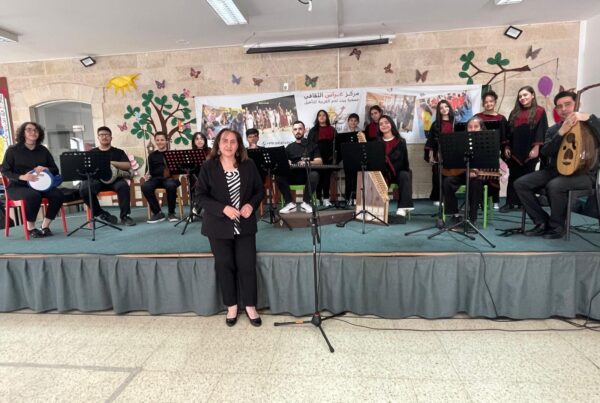
At Musicians Without Borders , we know so well how the power of music can go above and beyond the power of words, how music can express our deepest feelings, create a connection, open up spaces that have been closed by the unspeakable, give us space to breathe and feel again, give us the courage to keep going, to keep feeling, to do the right thing.
For anyone who longs for that space these days, please sit for a few minutes and listen to this music, and let yourself feel—and then imagine how important this flow of feeling must be for people living through the current genocide.
For myself, a musician and an activist for so many years, that first song moved me to action. The last line of the song appeals to us: on the first Monday of the month, when you hear the siren at noon*, think about Hind Rajab.
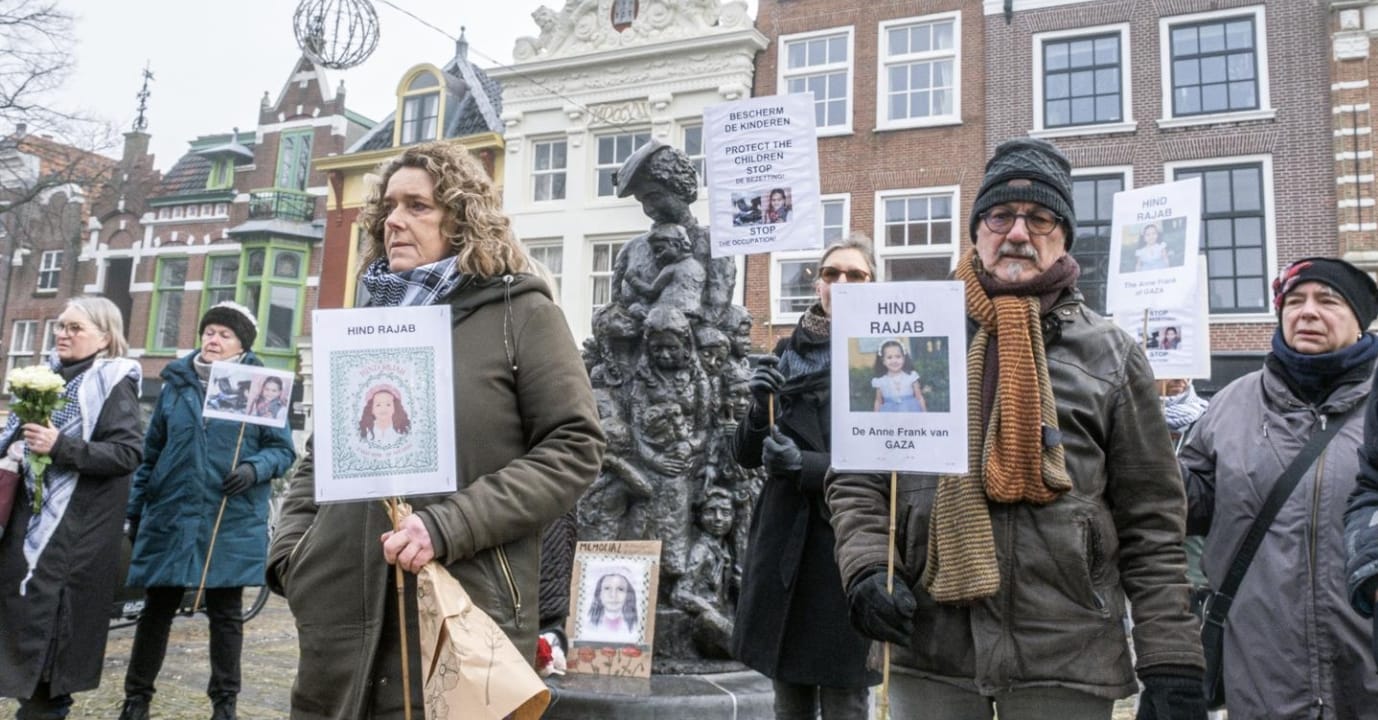
I put out a call, and we met at a monument depicting a local hero who had rescued Jewish children during WWII. We held signs, comparing Hind Rajab to Anne Frank. We read poems. We covered the sculpture with roses. And we listened to the song: ‘Have you heard the story of Hind Rajab?….’
Laura at the Hind Rajab memorial demo
*In The Netherlands, the emergency sirens and alarm systems are tested on the first Monday of every month at 12 noon.