
“Miss, I feel as if it’s war when we start playing this note, but then at the end, there is peace.”
My ten-year-old cello student has just eloquently described feeling the transition from war to peace through the chords we play. A dissonant chord lacks harmony between two notes (war), but are then resolved in a consonant chord (peace). I tried to remember how I felt when I was a ten-year-old cello student, and of my teacher, a cellist who was forced to leave her country due to war in the former Yugoslavia. I had no idea about her country nor its history – all I knew was that she had a foreign accent. One morning in 1990, when I was practicing the piano, I remember my mother coming down ths stairs with tears in her eyes., telling me that the war had started. I didn’t understand. War? Where? Here? In The Netherlands? No, it was a war far away, she was talking about the Gulf War. I didn’t understand why my mother cared about a war that would not affect my life. I could feel that it must be something terrible, but my only connection with war was my cello teacher and my mother’s announcement.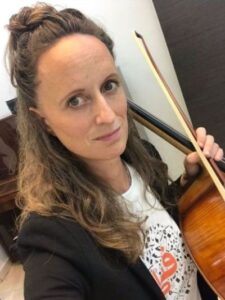
Our students now what war means – they live it every day. They might not fully understand it, but they can tell you all kinds of details that children should never have to experience. But even without ever knowing peace, experiencing it even through a chord in music, is a moment of shared relief. This is the true power that music holds, a power that we all still have, even in lifetimes full of war and chaos.
I hope that you enjoy reading these updates from our project in the West Bank.
In peace,
Fabienne van Eck, Regional Program Manager Middle East and Trainer
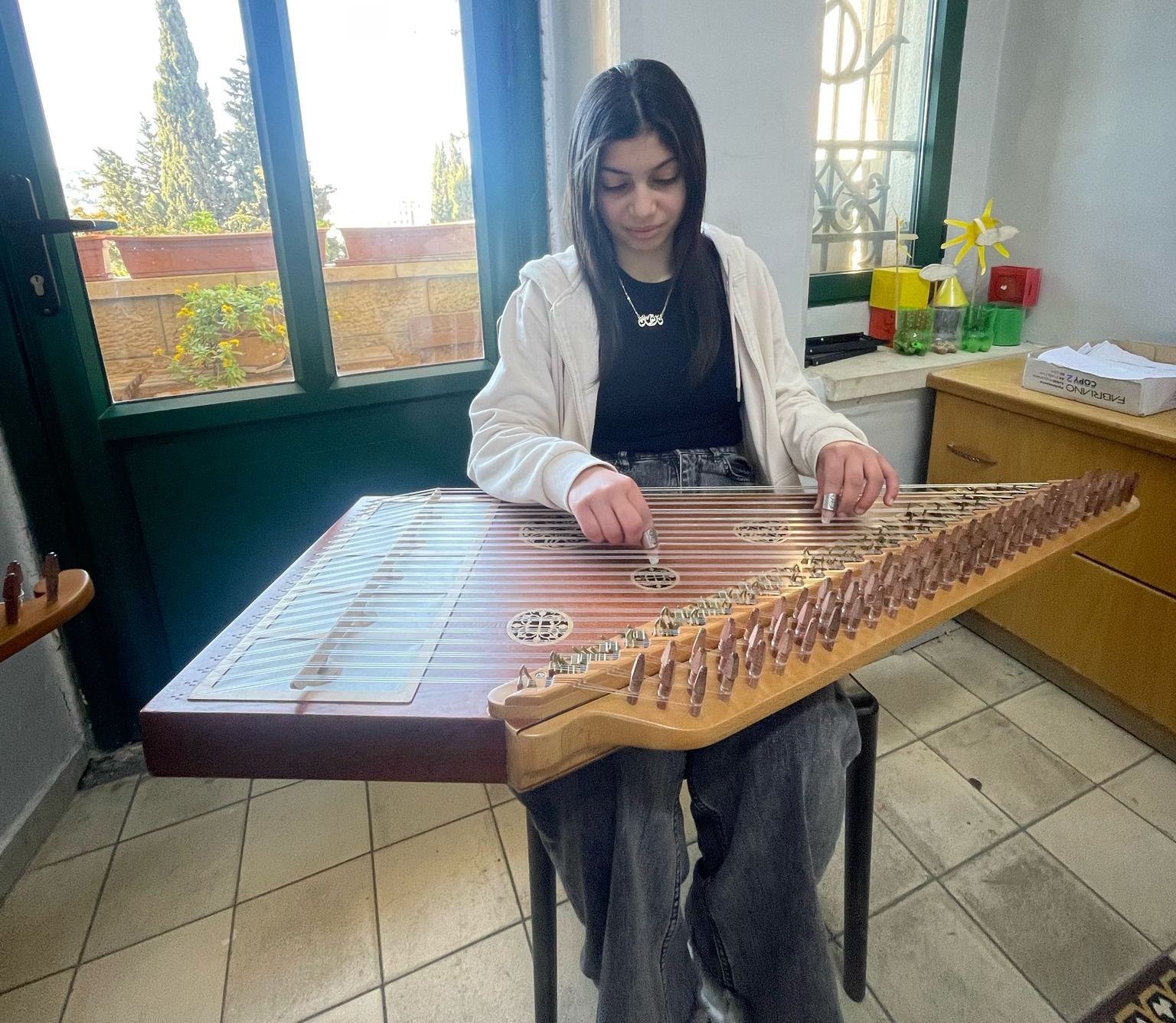
Meet qanun student Nariman
Meet Nariman, one of our qanun students. Nariman joined our program as soon as we opened the qanun class two years ago.
Project coordinator Manal asked Nariman about her interests in learning the qanun, and her involvement in the music program.
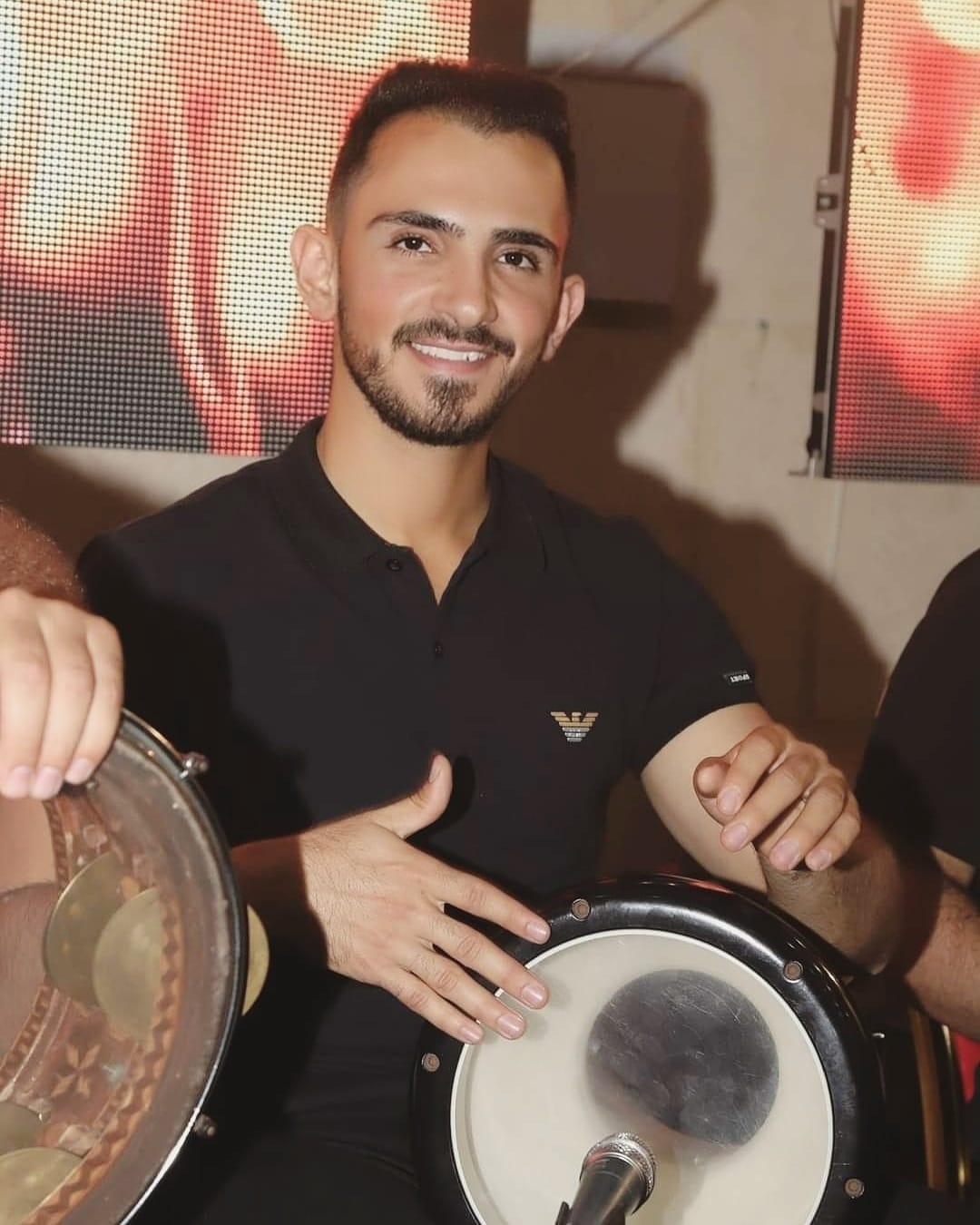
Meet our percussion teacher Milad Qassis
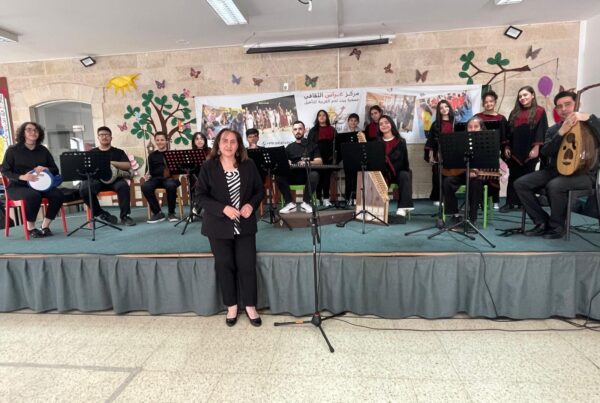
One of the pillars in our music program is Milad Qassis: he is both our percussion teacher and the leader of our Arabic ensemble (takht sharqi). Together with Abeer Sansour, our choir conductor, he leads this ensemble of our advanced students, and focuses on the rich folklore music of Palestine.
Name: Milad Qassis
Role: Percussion teacher and leader of the Takht Sharqi (Arabic ensemble)
From: Beit Sahour
What would you like to share about the music program?
This program is very important. First of all, because music is culture and our students learn about their culture through the music. I see differences between children who learn music and children who don’t.
Music is food for the child’s soul. Music programs should be offered at all centers because it’s so important not only for the children but also for the society, to be in touch with culture and to be aware of culture. Our students learn about heritage, tradition, and folklore, from our country and from other places as well. In addition, music helps to increase their confidence and helps them to express their emotions.
Can you share a story of the program?
There was a new student, Mahmud (not his real name) who showed very difficult behavior at first, and it was challenging to deal with him in the class with the other students. Through the structured music lessons and the structure of the music itself, he started to integrate into the class and to moderate his behavior. Instead of running and jumping around, he was able to sit in his chair and practice. He is even playing different Arabic rhythm patterns now. After only a few months, he has started playing very well, so it’s clear that the lessons have helped him to improve his behavior and his music playing at the same time.
Mother’s Day
Mother’s Day is celebrated in Palestine on March 21st. This year, like last year, it was a difficult day, because in the last few days so many children in Gaza have lost their mothers, and so many mothers have lost their children…We recorded this special song – Yammo (oh mother) – to honor all mothers.
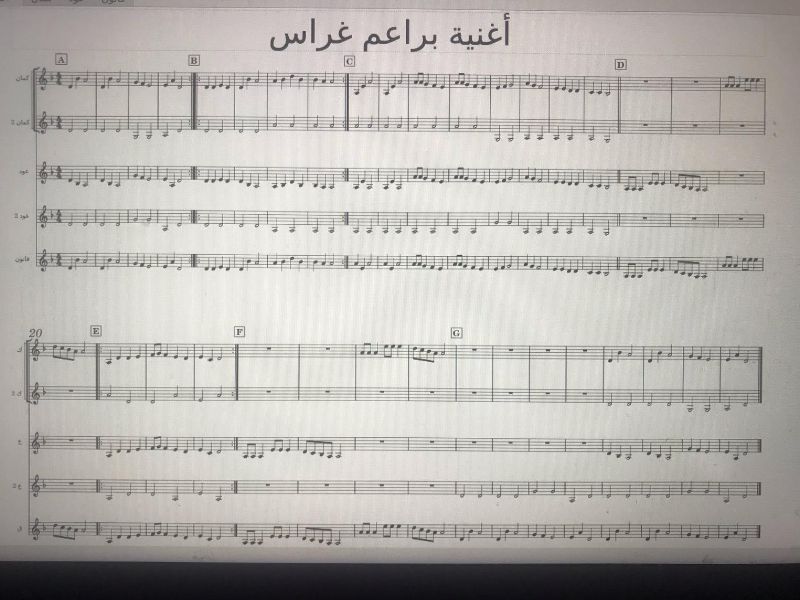
Composition Workshop
Our students recently participated in a composition workshop I gave in which they wrote melodies and rhythms in small groups. Afterwards, they shared these with each other, and with my help in bringing their creative efforts together, they have composed their own music piece!
We are still practicing the piece and looking forward to sharing it with you once it’s ready!